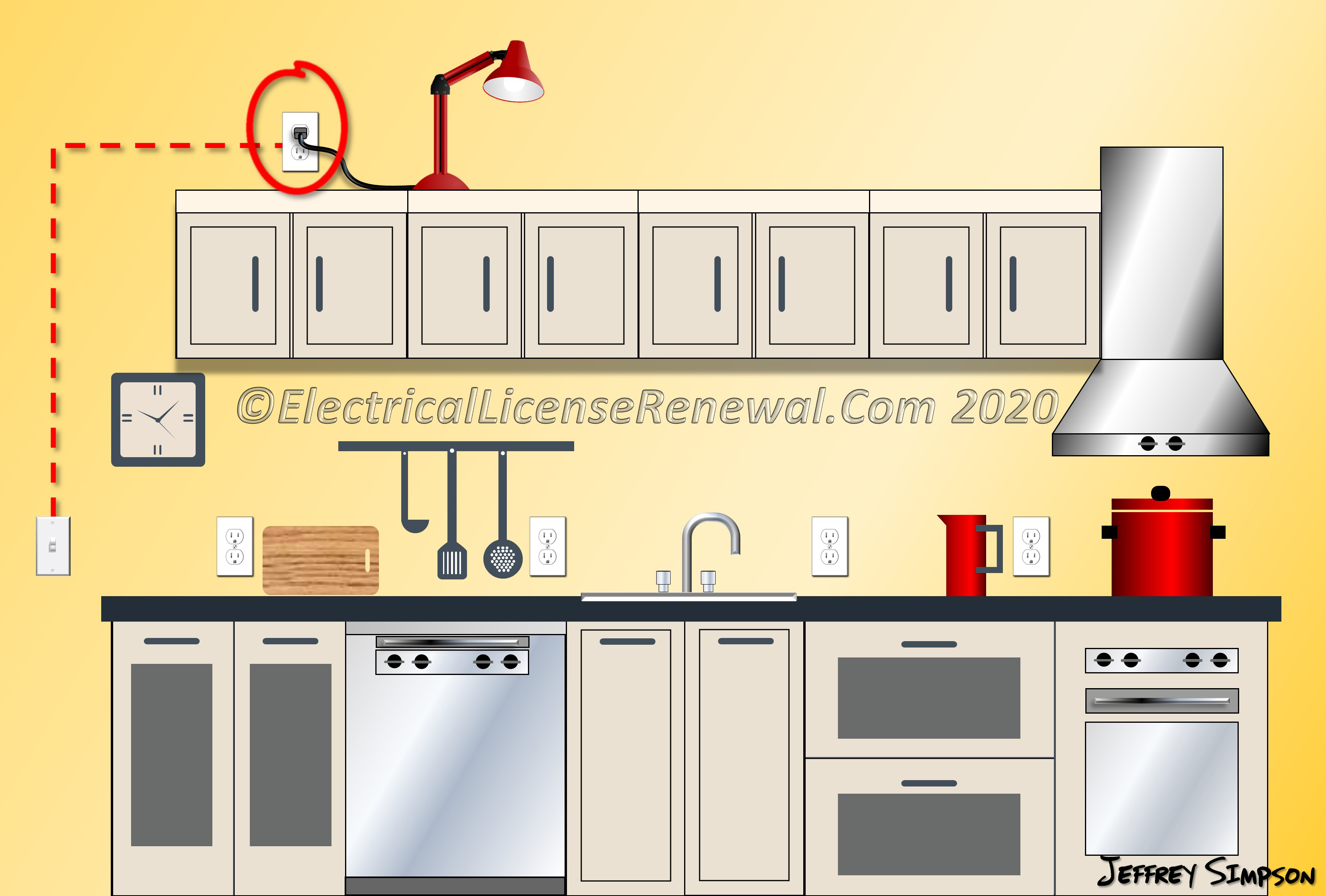
Is your toaster popping breakers more often than bread? Juggling multiple high-power appliances in the kitchen on one circuit can quickly become a recipe for electrical disaster. Overloaded circuits are a leading cause of house fires, and no one wants that kind of excitement.
Proper kitchen and bathroom wiring is paramount for both your safety and your home's energy efficiency. Modern kitchens are power-hungry spaces. Refrigerators, microwaves, dishwashers, blenders – they all demand significant amperage. Trying to run them all on a single, inadequately sized circuit is like trying to feed an elephant with a teaspoon. It's simply not going to work, and it's potentially dangerous. Similarly, bathrooms deal with moisture, necessitating special wiring precautions to prevent shocks. Investing in correctly sized and installed circuits, including GFCI protection where required, not only prevents dangerous overloads and potential fires but also ensures your appliances run efficiently, saving you money on your energy bills in the long run. Getting this right gives you peace of mind and protects your loved ones.
Understanding Circuit Loads in Your Kitchen
Before even thinking about adding another appliance to a circuit, it’s crucial to understand how much power you’re already using. This involves a little electrical math, but don’t worry, we'll break it down. Kitchen circuits are typically either 15-amp or 20-amp. A 15-amp circuit can safely handle a maximum of 1800 watts (15 amps x 120 volts = 1800 watts), while a 20-amp circuit can handle 2400 watts (20 amps x 120 volts = 2400 watts).
To determine the wattage of an appliance, look for a label on the appliance itself. It might be listed in watts (W) or amps (A). If it's listed in amps, multiply the amps by 120 volts to get the wattage. Add up the wattage of all the appliances you plan to use simultaneously on the circuit. If the total exceeds 80% of the circuit's capacity (1440 watts for a 15-amp circuit, 1920 watts for a 20-amp circuit), you're pushing your luck and need to reconsider your wiring. The 80% rule is important because it accounts for continuous loads.
People Also Ask (FAQ): What’s a continuous load?
A continuous load is defined as a load that operates for three hours or more at a time. For example, a refrigerator or a freezer that runs almost constantly would be considered a continuous load.
Separate Circuits: The Ideal Solution
The best and safest solution for handling multiple kitchen appliances is to have dedicated circuits for each high-power appliance. This means each appliance has its own circuit breaker and wiring run directly from the electrical panel. Here are some appliances that shouldalwaysbe on their own dedicated circuits: Refrigerator: It's a continuous load and critical for food preservation. Microwave: High wattage, especially during peak usage. Dishwasher: Significant power draw during heating cycles. Electric Oven/Range: These almost always require a dedicated 240-volt circuit. Garbage Disposal:Short bursts of high power.
While youcouldpotentially group smaller appliances on a general kitchen circuit, it's crucial to accurately calculate the load and ensure it stays well within the safe limit.
People Also Ask (FAQ): How do I know if I need a 240-volt circuit?
Appliances that require a large amount of power to operate, like electric ovens, ranges, clothes dryers, and some water heaters, typically require a 240-volt circuit. These circuits use two "hot" wires carrying 120 volts each, plus a neutral and ground wire. The appliance's specifications will clearly state whether it needs 120 volts or 240 volts. The plug configuration will also be different; 240-volt outlets have a distinct appearance to prevent accidental connection of 120-volt appliances.
GFCI Protection in Kitchens and Bathrooms
Ground Fault Circuit Interrupters (GFCIs) are non-negotiable in kitchens and bathrooms. These devices are designed to protect you from electrical shock by quickly cutting off power if they detect a ground fault, which is when electricity leaks outside of the intended circuit path. This can happen if an appliance comes into contact with water or if there's a wiring fault.
GFCI outlets should be installed: Within six feet of any sink: This applies to both kitchen and bathroom sinks. Near dishwashers: Due to the presence of water. On any countertop receptacles:This is now a standard requirement in most jurisdictions.
You can either install GFCI outlets directly or use a GFCI circuit breaker in your electrical panel to protect the entire circuit.
People Also Ask (FAQ): GFCI outlet tripped? What should I do?
If your GFCI outlet trips, don't just blindly reset it. First, unplug all appliances plugged into that circuit. Then, reset the GFCI. Plug the appliances back in, one at a time, until the GFCI trips again. The last appliance you plugged in is likely the culprit causing the ground fault. If it continues to trip with nothing plugged in, there’s likely a wiring problem, and you should call a qualified electrician.
DIY Wiring Tips and Precautions
If you're comfortable working with electricity and have a good understanding of electrical codes, youmightbe able to add a new circuit yourself. However, it's crucial to proceed with extreme caution and always prioritize safety.Incorrect wiring can be deadly.Here’s a quick overview; please consult with local electrical codes or a qualified electrician for proper guidelines.
Turn off the power: Always, always,alwaysturn off the power at the main breaker before working on any electrical wiring. Double-check with a non-contact voltage tester to ensure the circuit is dead. Use the right tools: Invest in quality electrical tools, including wire strippers, pliers, screwdrivers, and a voltage tester. Use the correct wire gauge: The wire gauge must be appropriate for the circuit's amperage. Using too thin a wire can lead to overheating and fire. 14-gauge wire is typically used for 15-amp circuits, and 12-gauge wire is used for 20-amp circuits. Properly ground all outlets and appliances: Grounding provides a safe path for electricity to flow in the event of a fault. Make secure connections: Loose connections are a common cause of electrical problems. Ensure all wire connections are tight and properly secured. Use wire connectors (wire nuts) and electrical tape correctly. Label everything clearly: Label all circuits in your electrical panel so you know what each breaker controls.
Steps to Adding a New Circuit (Simplified)
1.Planning: Determine the appliance wattage, circuit amperage, wire gauge, and outlet location.
2.Turn off the main breaker.3.Run the cable: Run the appropriate gauge wire from the electrical panel to the new outlet location. Secure the cable to studs or joists along the way.
4.Connect to the panel: Connect the new circuit breaker to the bus bar in the panel, and connect the neutral and ground wires to the appropriate terminals.
5.Wire the outlet: Connect the hot, neutral, and ground wires to the new outlet, following the color code (black to brass, white to silver, green or bare to ground).
6.Test: Turn on the circuit breaker and test the outlet with a voltage tester. Ensure it’s working correctly and that the GFCI protection (if applicable) is functional.
7.Label: Label the new circuit breaker in your electrical panel.
Disclaimer: This is a simplified overview. Adding a new circuit can be complex and dangerous if not done correctly. If you are not comfortable working with electricity, it is best to hire a qualified electrician.
Energy-Efficient Wiring Practices
While you're upgrading your kitchen wiring, consider incorporating energy-efficient practices. This not only saves you money on your electricity bills but also reduces your carbon footprint.
Use LED lighting: LED lights use significantly less energy than traditional incandescent or fluorescent lights. They also last much longer, reducing the need for replacements. Install occupancy sensors: In areas like pantries or under-cabinet lighting, occupancy sensors can automatically turn lights on and off, ensuring they're only used when needed. Consider smart outlets:Smart outlets allow you to remotely control appliances and monitor their energy consumption. This can help you identify energy hogs and reduce standby power usage.
Knowing When to Call a Professional
There are times when DIY wiring is simply not advisable. If you're uncomfortable working with electricity, if you're unsure about local electrical codes, or if you're dealing with complex wiring issues, it's always best to call a qualified electrician. Electricians have the training, experience, and tools to safely and effectively handle any electrical wiring project. They can also ensure that your wiring meets all applicable codes and regulations. Some signs that you need to call a professional include: You’re unsure how to properly size a circuit breaker. You're uncomfortable working inside the electrical panel. You're dealing with aluminum wiring. You're experiencing frequent electrical problems, such as tripped breakers or flickering lights. *You suspect there is a wiring fault.
Wiring multiple kitchen appliances on one circuit can be tricky, but by understanding circuit loads, prioritizing safety, and following best practices, you can ensure your kitchen is powered safely and efficiently. Remember, when in doubt, consult with a qualified electrician. Electrical work is not something to take lightly, and your safety is always the top priority. With a little planning and caution, you can create a kitchen that's both functional and safe for years to come.

Posting Komentar